
[vc_row row_type=”row” use_row_as_full_screen_section=”no” type=”full_width” angled_section=”no” text_align=”left” background_image_as_pattern=”without_pattern” css_animation=””][vc_column][vc_column_text] Some time ago we wrote an entry on the perception of hand time from John Wearden studies, but in This time we analyze and obtain conclusions from research at the University of Waterloo in Canada. An essential article to have an overview of the perception of time naturally as we age.
Costs to the elderly more distinguish the order in which events occur
Research from the University of Waterloo in Canada has revealed that older people have more difficulty than younger people distinguishing the order in which events occur (before, during or after other events). This can affect performance on tasks that require quick decision making, such as driving. The good news is that there are tools to correct this circumstance.
According to thermodynamics, everything flows from the past to the present and from the present to the future, inevitably and irreversibly. This seems, for now, undeniable. However, the perception of time is not always the same: varies between different animal species or depending on the activity we are doing (astonishment is recommended, if we want to stretch out time). It can even vary depending on the moment in life we are in.
The latter is what a study from the University of Waterloo in Canada has just shown: Older people have more difficulty than younger people distinguishing the order in which events occur (before, during or after other events).
The elderly, therefore, can see the course of some events like someone watching a video whose sound does not fit the images. This can affect performance on tasks that require quick decision-making, such as driving, the scientists explain.
The evidence for the study of the perception of time
 This circumstance was confirmed in an experiment in which young adults and older adults were presented with a light and a sound that appeared either at the same time or at different times. Participants had to determine which of these two sensory stimuli had appeared before. This is how it was discovered that the elderly had greater difficulties in doing so.
In a second experiment, participants were shown two lights traveling toward each other. Generally, the lights did not touch (they passed by each other). However, if a sound was made at the moment when they were closest, the lights seemed to touch and bounce.
In this test, older adults perceived the lights as bouncing even when the sound occurred long before or long after the lights passed each other, suggesting that they were inappropriately combining the sensory information they received.
The results of both tests on the perception of time are important because they indicate that older adults may experience problems in processing multisensory information. This, in turn, would affect their daily tasks, such as the aforementioned driving or maintaining balance, the researchers point out.
The good news is that It is possible to strengthen the mature brain to counteract this deficit, using video games or brain stimulation activities. With these tools, the quality of life, security and independence of the elderly could be improved, the scientists conclude.
Depression also distorts the perception of time
But the aging brain is not the only one that distorts the passage of time. So do some psychological conditions, such as depression.
In this sense, it has been discovered that depressed people perceived that time passes more slowly, at a subjective level, than those who are not depressed. This was confirmed last March, in a review of 16 studies in which 433 depressed people and 485 non-depressed control people participated. text_align=”left” background_image_as_pattern=”without_pattern” css_animation=””][vc_column width=”2/3″][vc_column_text]Half a second delay for everyone
Even if we do not find ourselves in any of these situations (even if we are young and have good mental health), the truth is that our brain never reaches the speed of events: the time of our perceptions is always about half a second behind the real time in which these events occur.
At least this is what defending Benjamín Libet neurologist in his book Mind Time: The Temporal Factor in Consciousness. So, for now, it seems that the only certainty we have about time is what thermodynamics indicates.
Bibliographic reference:
Gillian Bedard, Michael Barnett-Cowa. Impaired timing of audiovisual events in the elderly. Experimental Brain Research (2015).
We owe this fantastic article to the editor Yaiza Martínez of Trends 21.
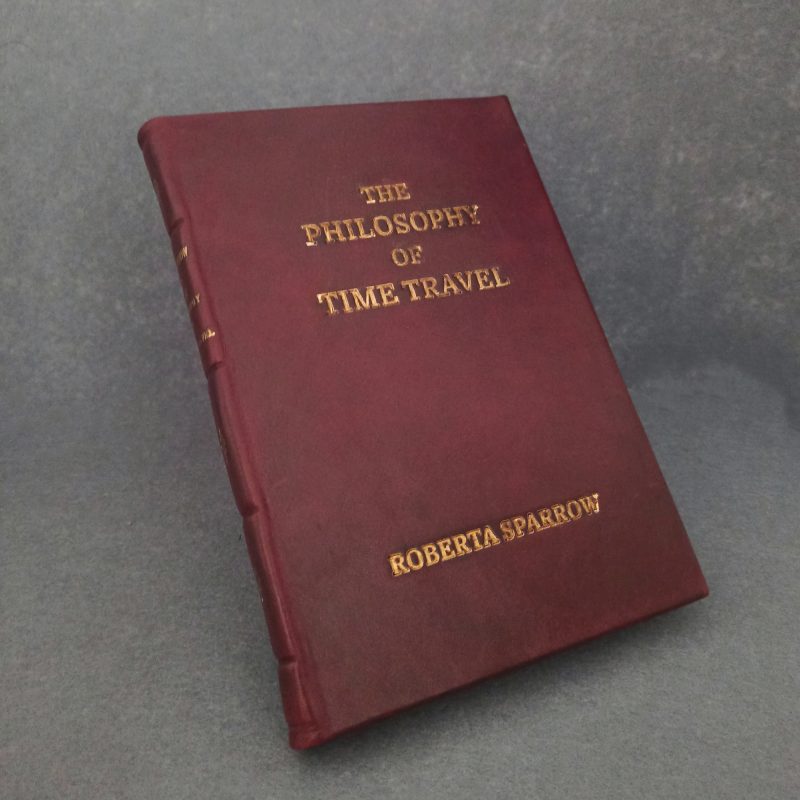
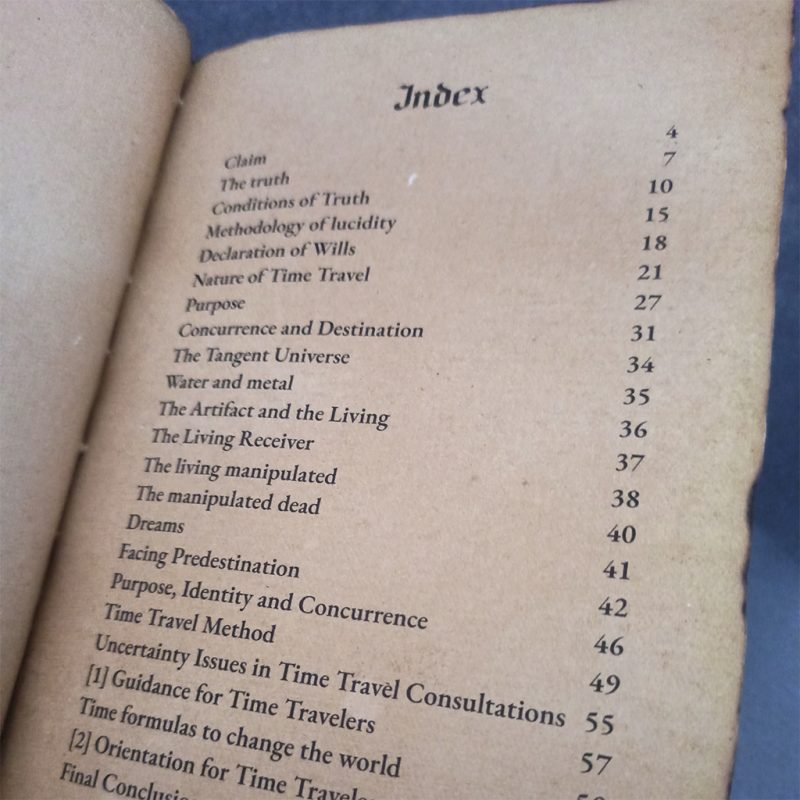
Reading for chrononauts · Limited edition
Philosophy can also cross time
A handmade work that explores the temporary traveler ethics, the concurrence of timelines, destiny and an introspective method to explore one's own history.
- Philosophy and moral standards for time travelers
- Tangent universes, causality, purpose and identity
- Illustrated and handcrafted A5 format
The file, availability and purchase are managed in Verbalus Mater.