The science of time travel
A rigorous—and understandable—map of the theories that allow time to be deformed in equations, of the experiments that already confirm their effects and of the limits that separate physics from fiction.
Twenty-two doors to understand the problem
Start with time dilation if you're looking for measured effects; continue through wormholes, rotation and cosmic strings to study shortcuts; ends in entropy, causality and quantum gravity to understand the limits.
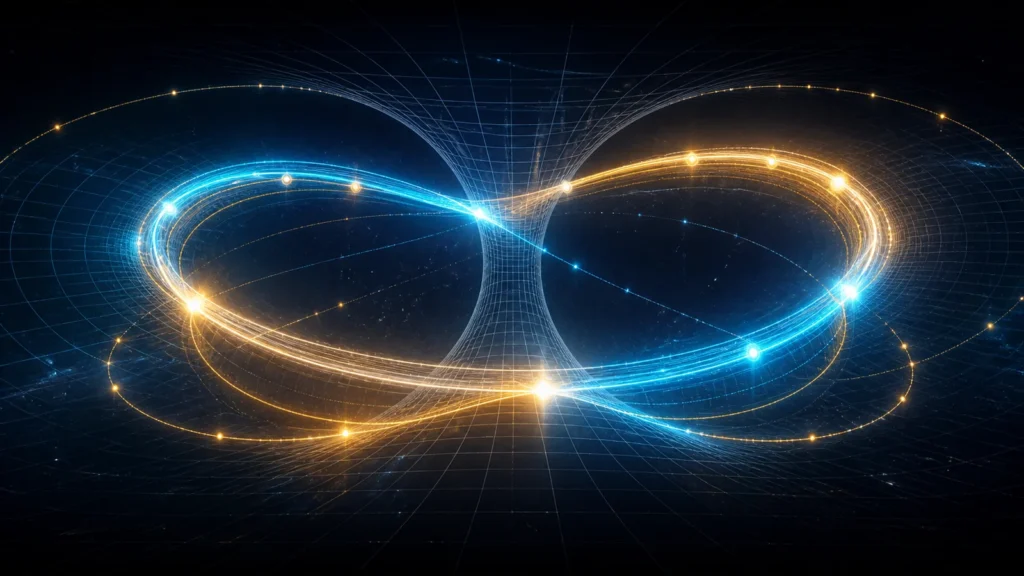
Wormholes
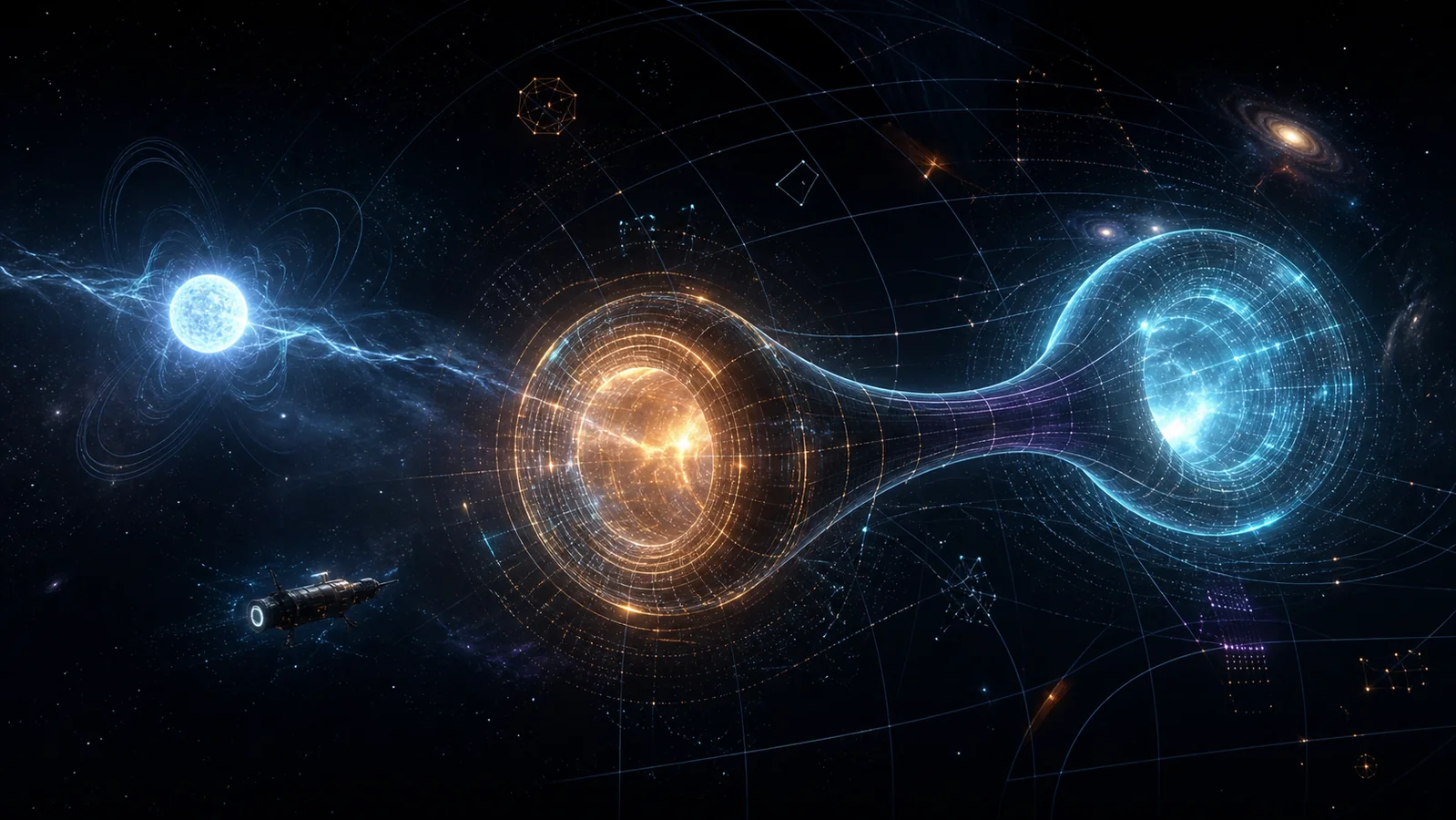
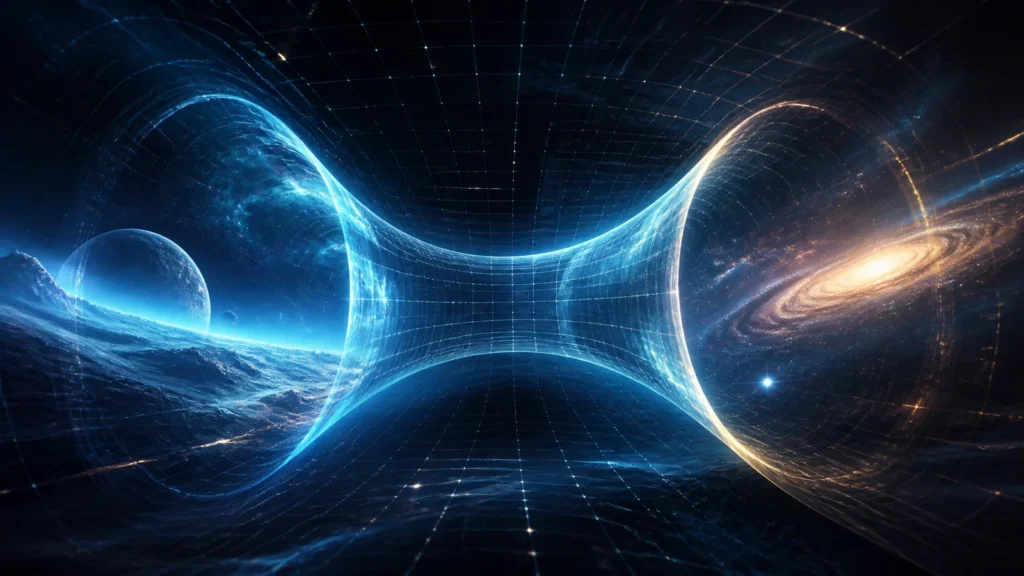
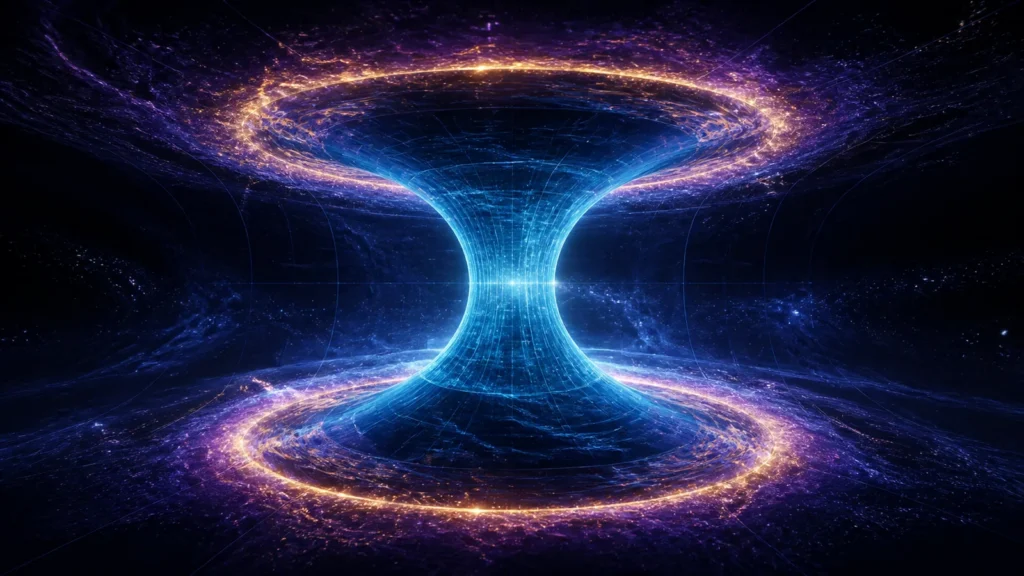
A wormhole is a hypothetical geometric bridge between separate regions of space-time. The equations allow us to describe it; keeping it open and turning it into a temporary machine is another story.
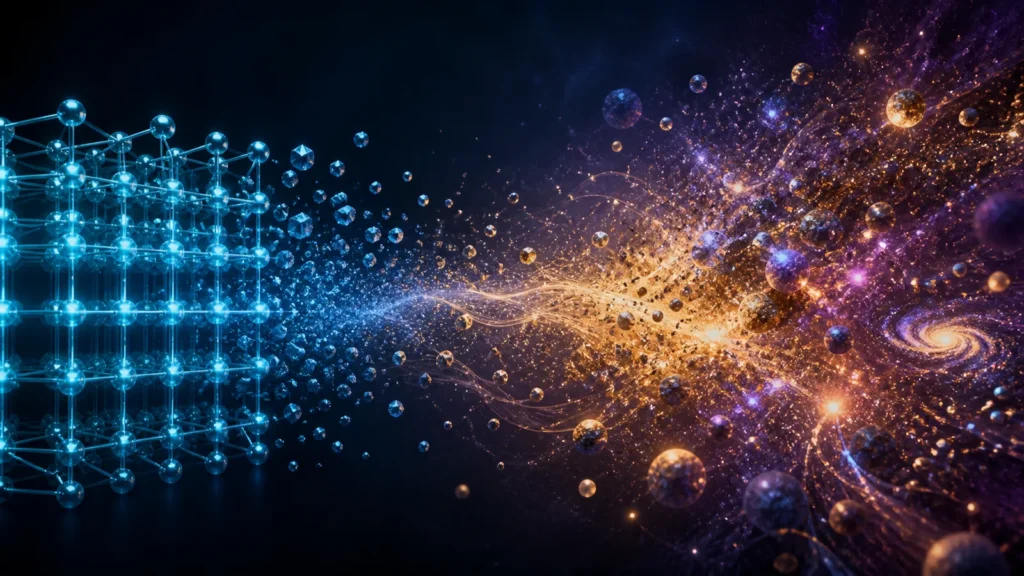
Casimir effect
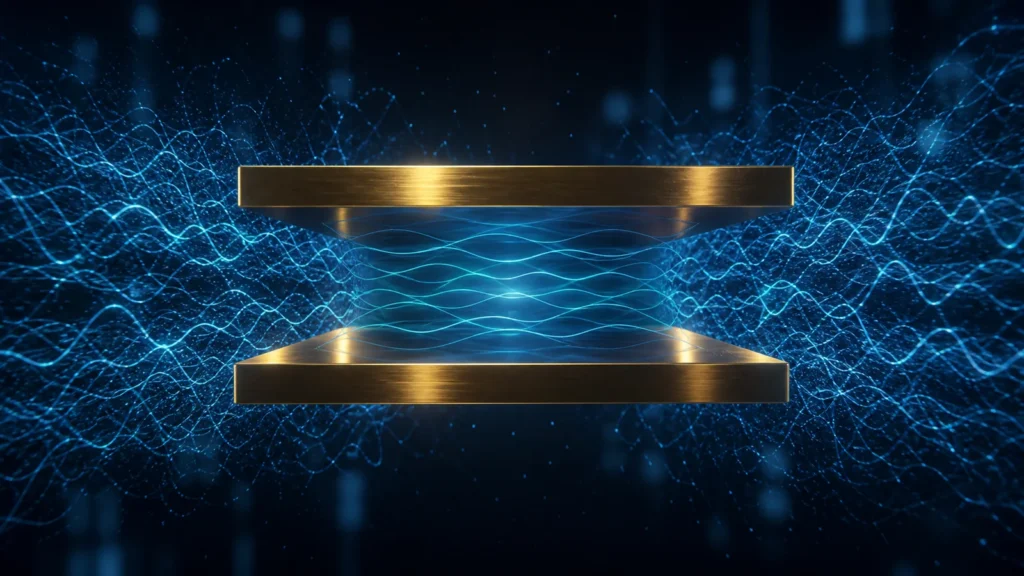
The quantum vacuum is not completely empty. The Casimir effect demonstrates that boundary conditions can modify its energy, although its scale is far from supporting a time machine.
Exotic matter
“Exotic matter” does not mean antimatter. It is the functional name of a distribution that violates certain energy conditions used in relativity and that could prevent the collapse of a throat.
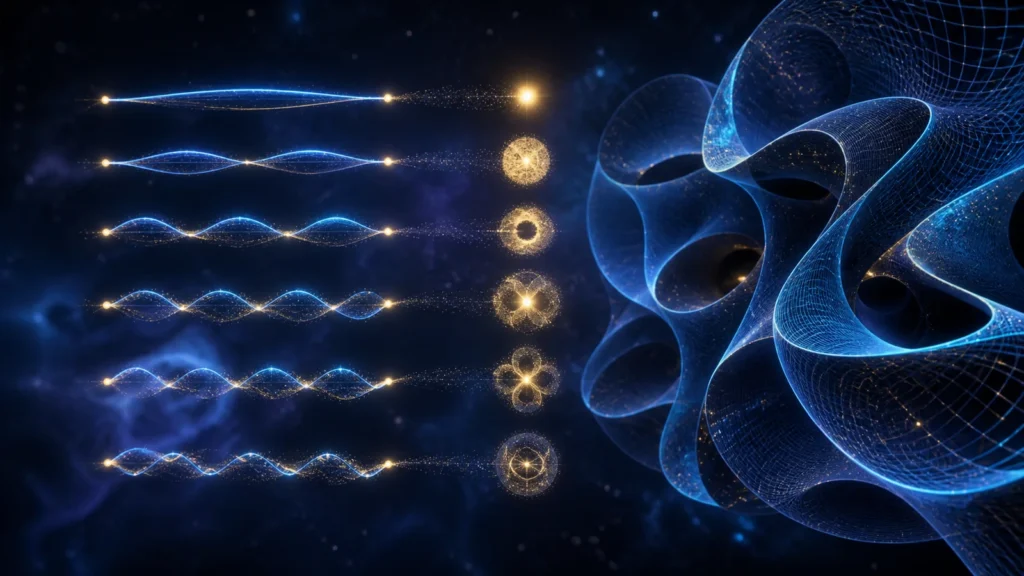
String theory
String theory attempts to unify gravity and quantum physics by replacing point particles with extended objects. Its relationship with time travel is indirect and deeply theoretical.
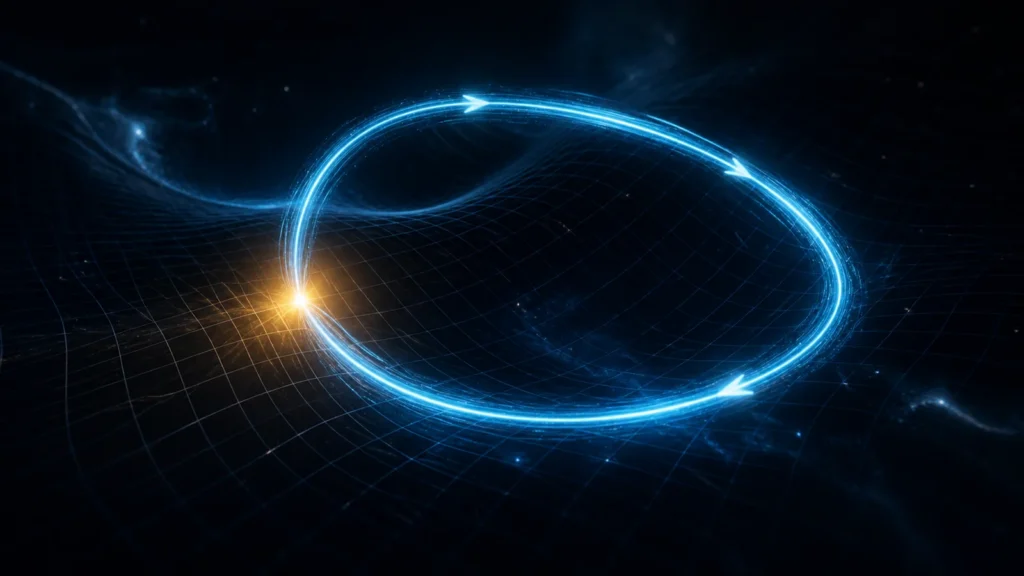
Closed time type curves
A closed time-type curve is a future trajectory for the traveler returning to an event in his or her own past. It is the most precise geometric definition of a relativistic time machine.
Gödel universe
In 1949, Kurt Gödel showed that Einstein's equations admit a rotating universe with closed time curves. His model is crucial as a counterexample, not as a description of our cosmos.
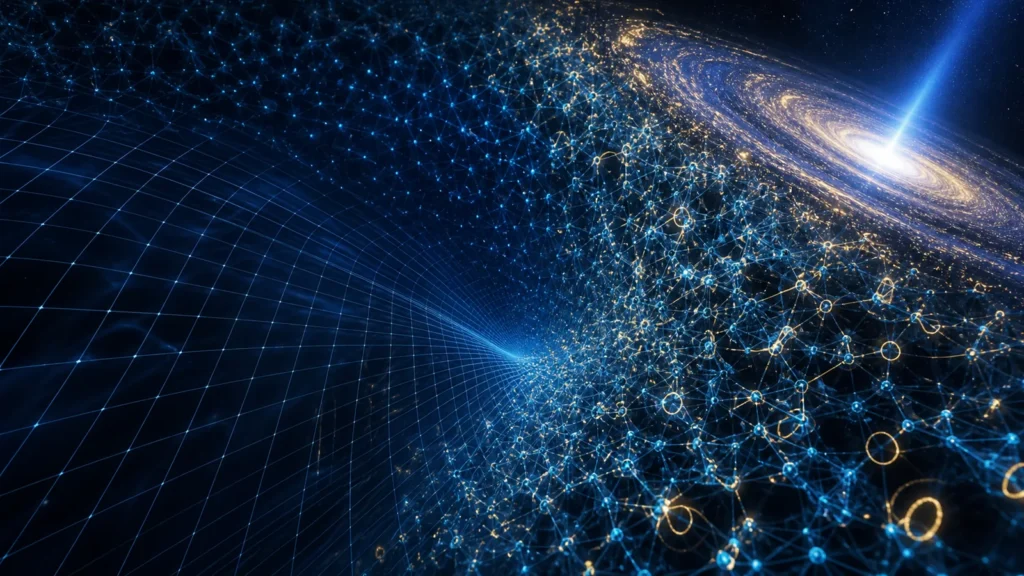
Quantum gravity
Relativity explains geometry and quantum theory explains microscopic matter. A time machine forces both to intervene at the same time, just where we still don't have a complete theory.
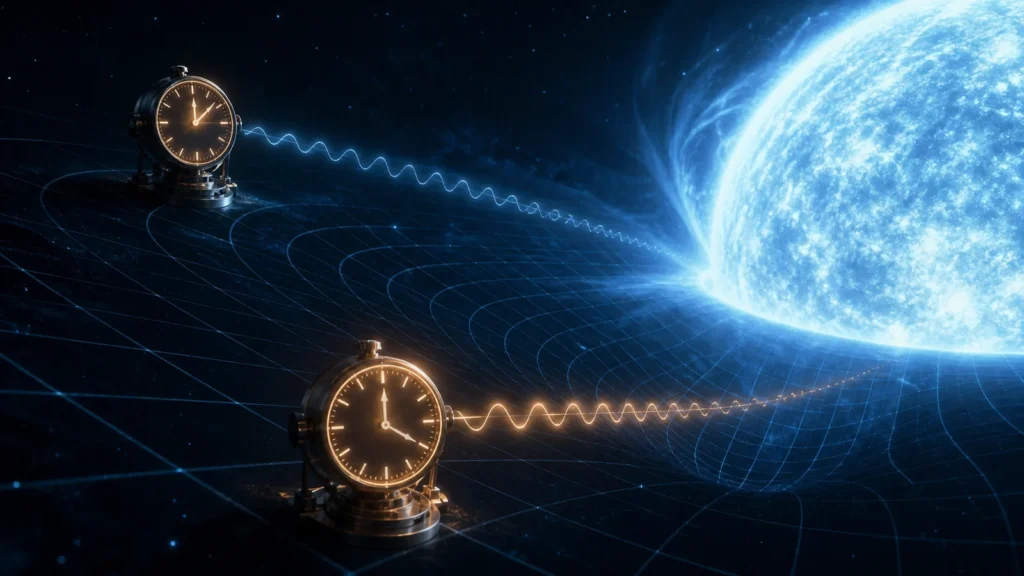
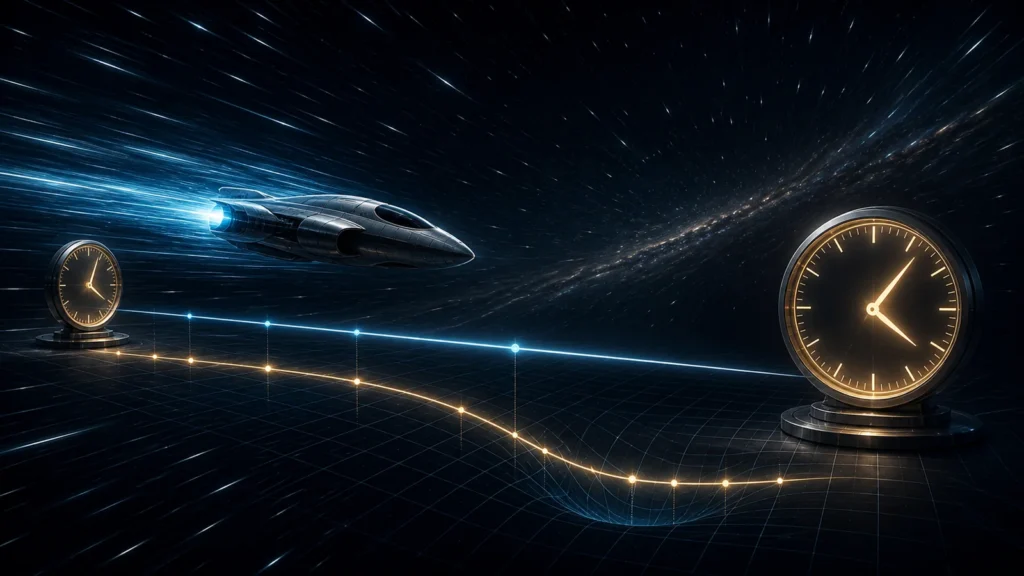
Gravitational time dilation
Clocks do not advance at the same rate in all places. Near a mass, time itself passes more slowly compared to a clock located in a region of lower gravitational potential.
Consistency conjecture
Novikov consistency proposes that if trajectories into the past exist, only globally coherent histories can occur. The traveler participates in the past; does not rewrite it.
The chronology protection
Stephen Hawking surmised that physical laws prevent the appearance of macroscopic closed time curves, keeping the universe safe for historians.
Retrocausality
Retrocausality studies models in which a future condition participates in the explanation of a past process. It is not automatically equivalent to sending a controllable signal back to yesterday.
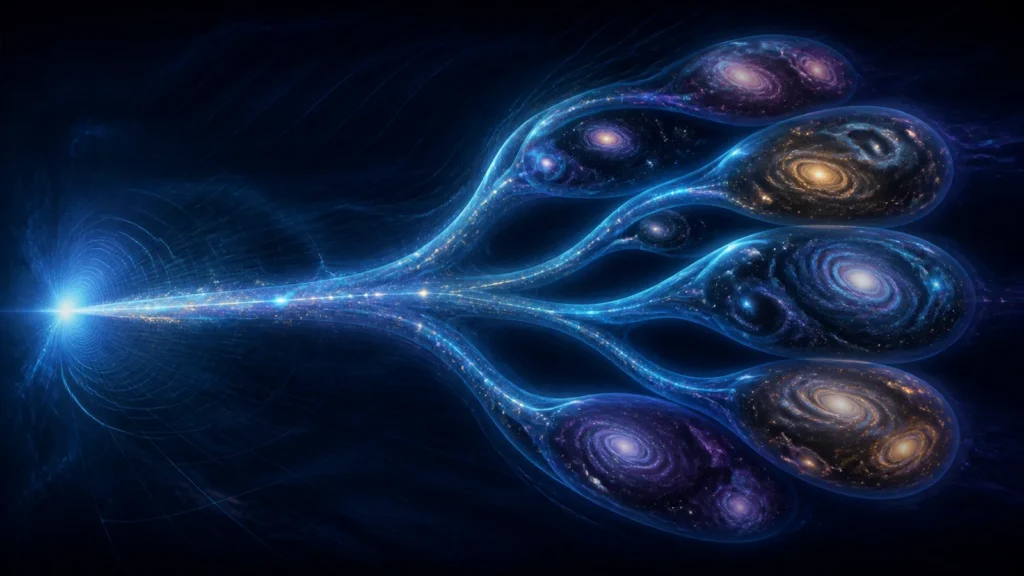
Parallel universes
Branching timelines offer a way to avoid contradictions: altering the past would create or achieve another history, without erasing the one that gave rise to the traveler.
Speed time dilation
Special relativity allows us to move into the future by making the clock of a fast traveler accumulate less time than that of those who remain on Earth.
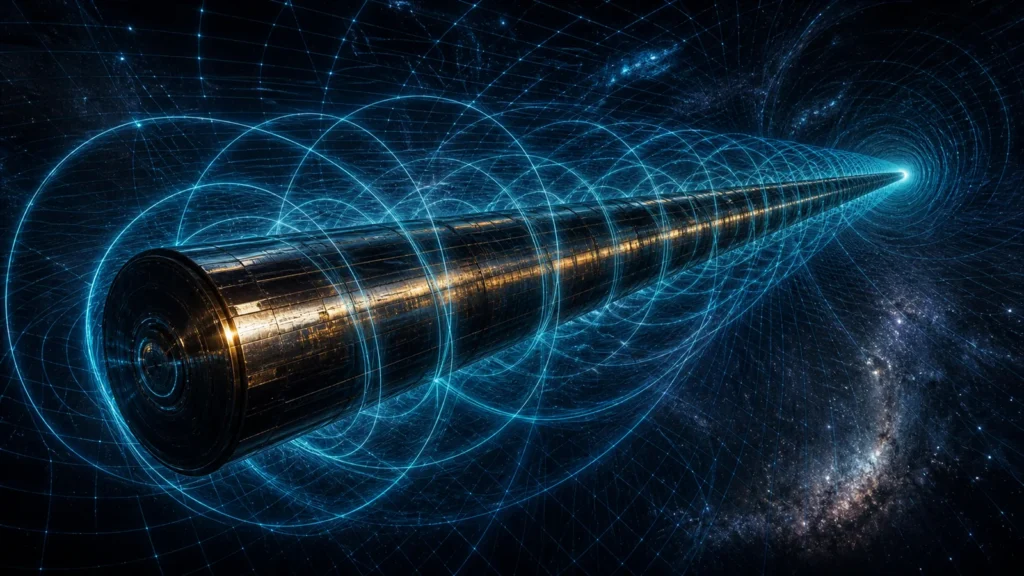
Cilindro de Tipler
An extreme solution based on a rotating cylinder that drags space-time to form trajectories capable of returning to the past.
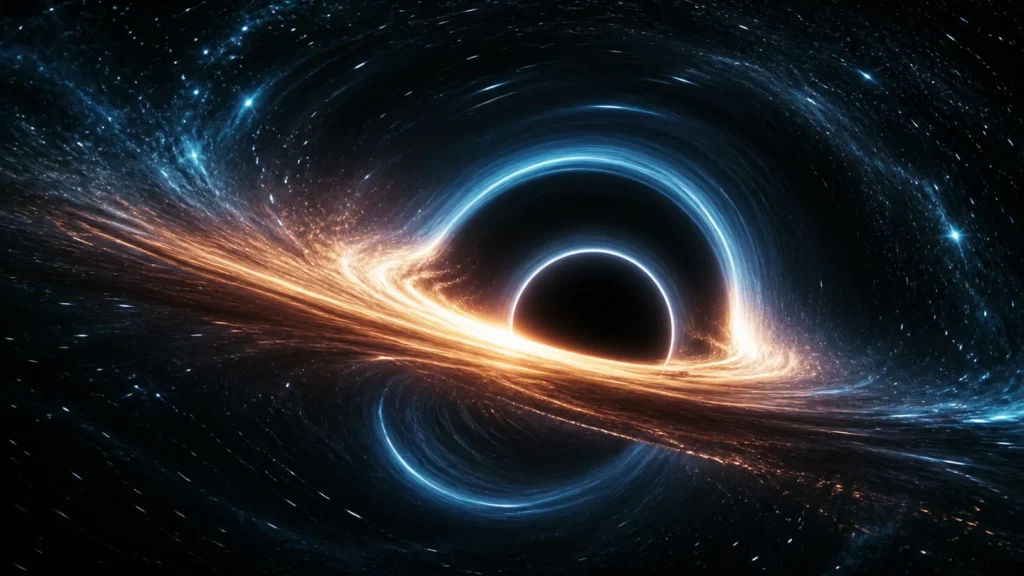
Kerr black holes
The ideal geometry of a rotating black hole contains acausal regions, although horizons, singularities and instabilities remain behind.
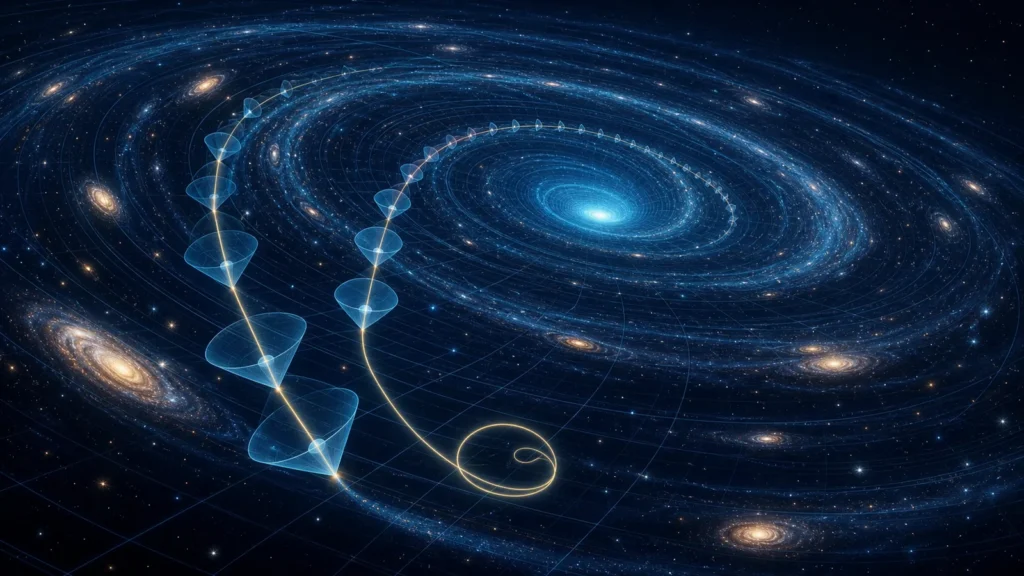
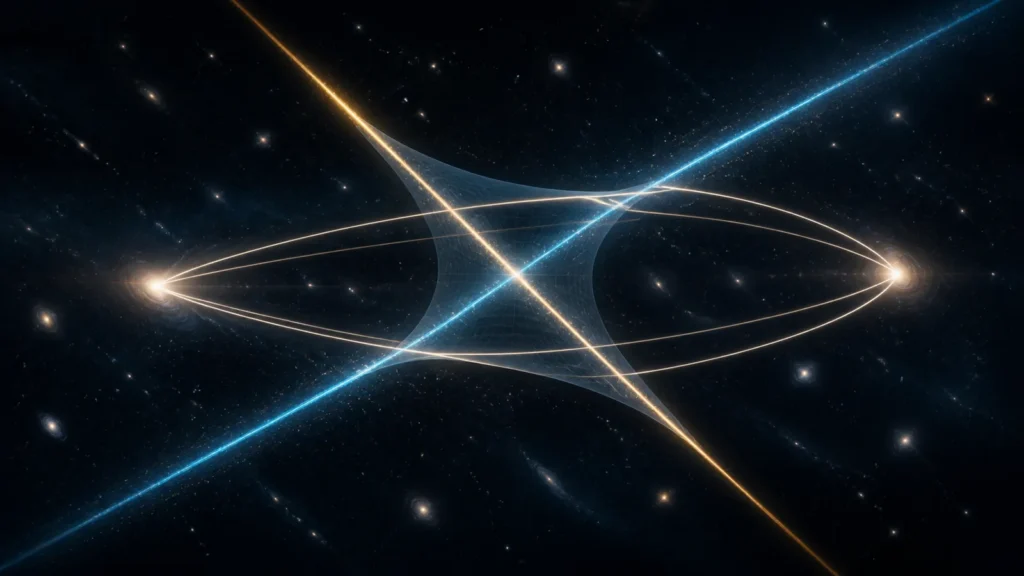
Cosmic strings and Gott's machine
Hypothetical cosmological defects whose relative motion could tilt light cones and produce time loops.
Flecha del tiempo y entropía
The physical reason why we remember the past and not the future, and the thermodynamic obstacle it imposes on any temporal reversal.
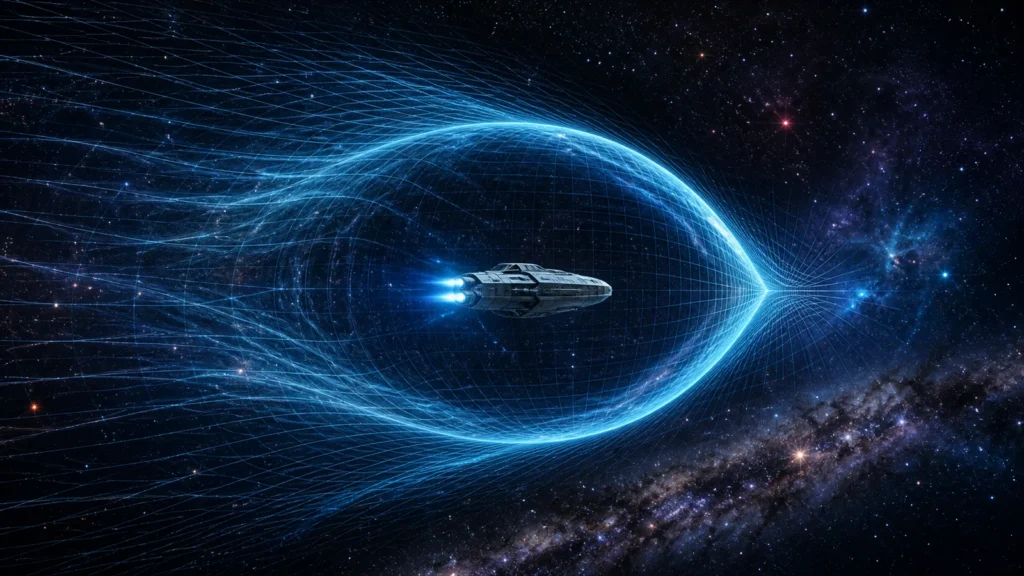
Alcubierre metric and curvature bubble
A bubble of space-time capable of producing global superluminal displacement and, by combining paths, opening the mathematical door to causal loops.
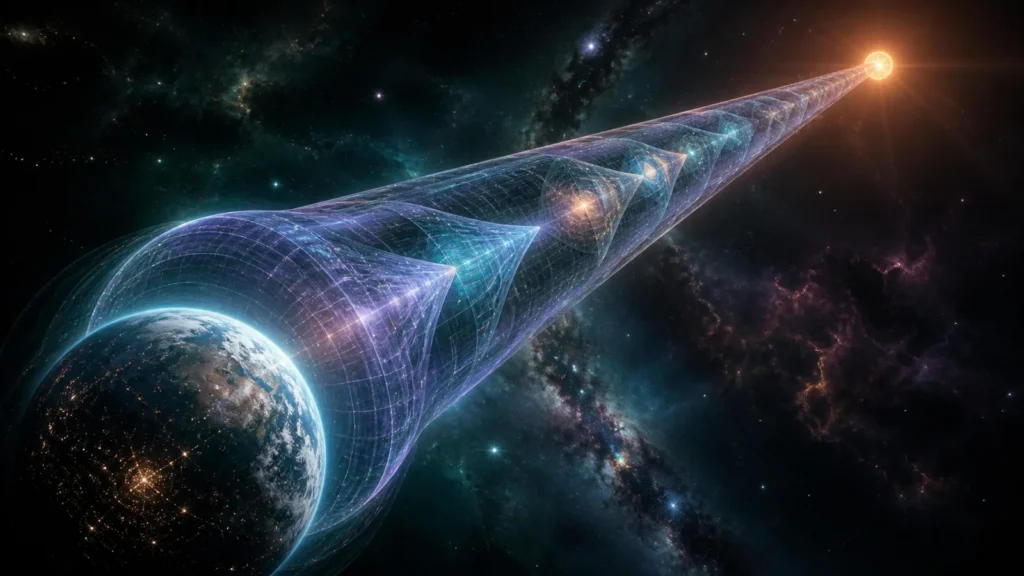
Krasnikov tube and causal corridor
A causal corridor created after a first crossing that would reduce the return time and, with a second route, could produce temporal loops.
Ori's time machine and toroidal core
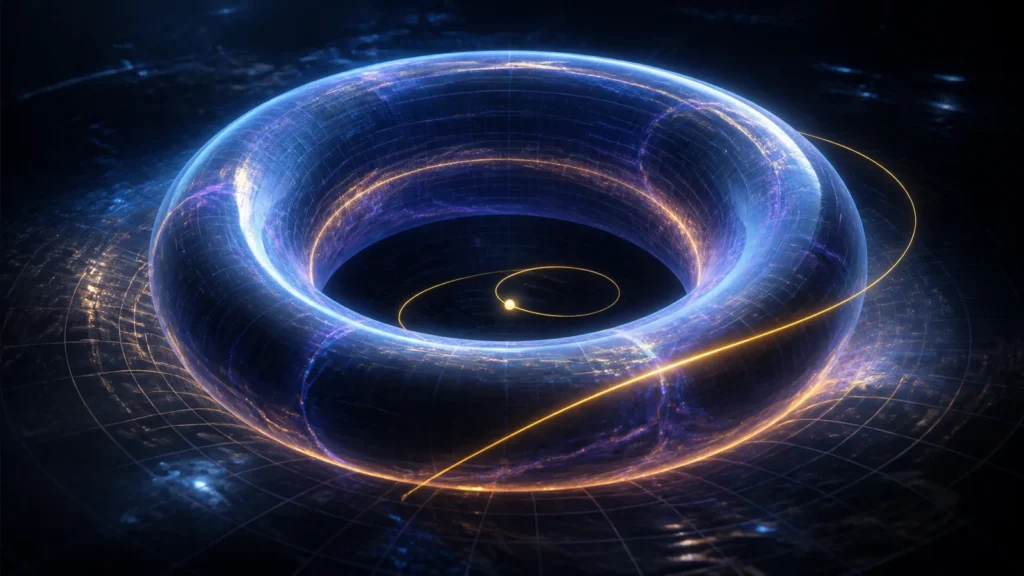
An initially causal toroidal geometry that develops closed temporal curves in a compact core; Its stability remains the great unknown.
Deutsch quantum time curves
A model where the system that goes through the loop must return with the same quantum state with which it entered, avoiding contradictions through mixed states.
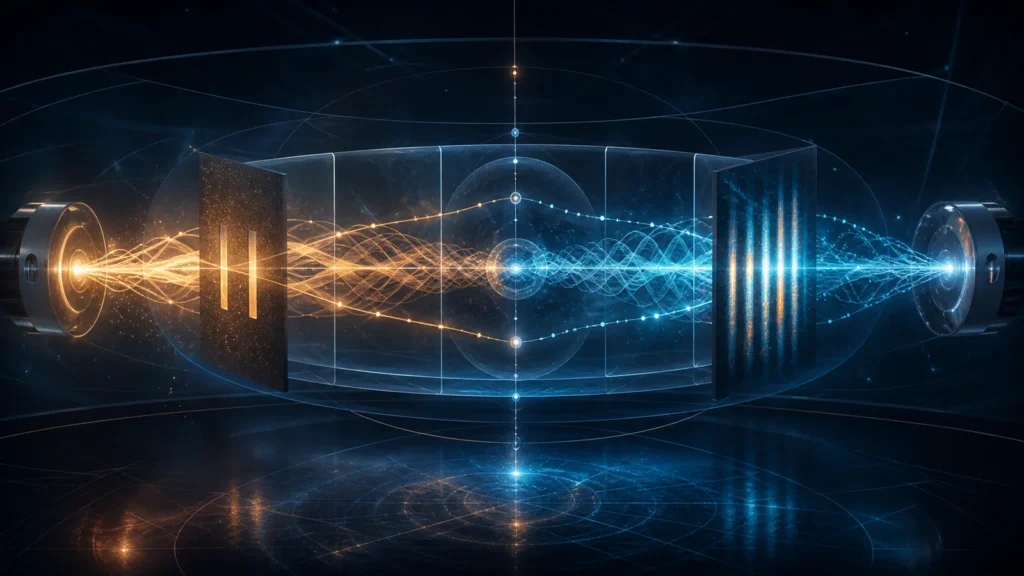
Time curves by quantum postselection
A formulation that preserves only the self-consistent quantum results through teleportation and postselection, with predictions different from the Deutsch model.
Receive stories capable of bending time
Únete a la comunidad y recibe como bienvenida una selección de cortometrajes sobre viajes en el tiempo. Después, te enviaremos nuevos análisis, paradojas y hallazgos sin ruido ni spam.