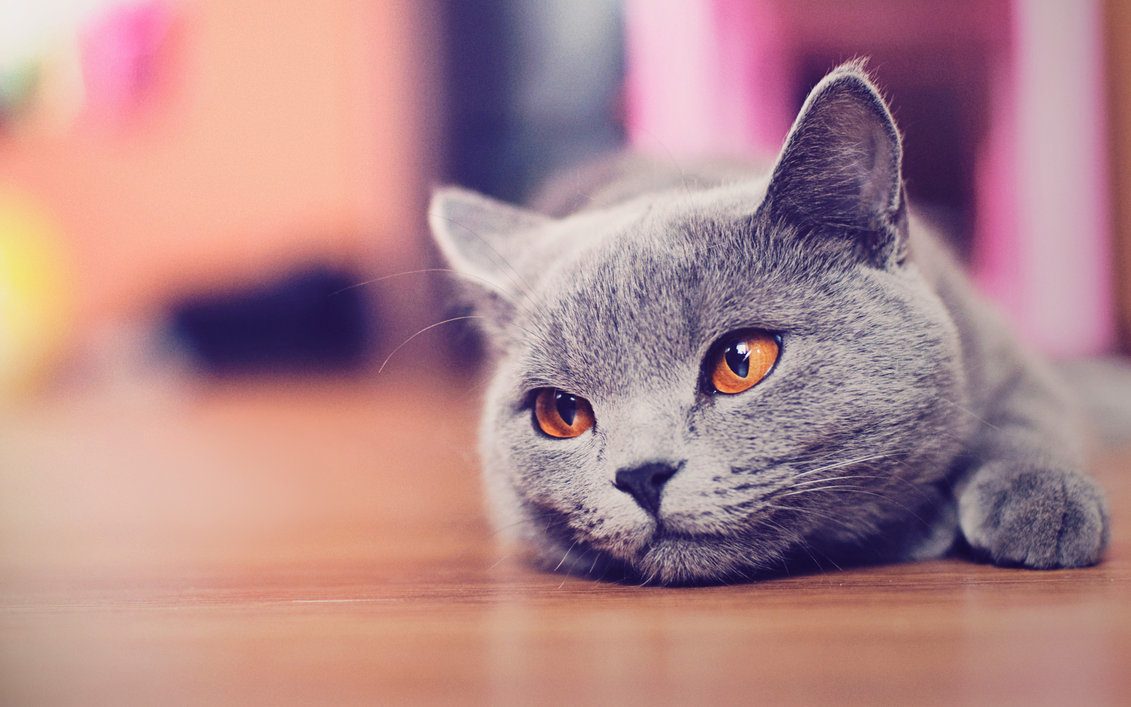
One of my favorite theories without a doubt, is that I have always liked cats, preferably live ones. Today we talk about the physical theory of Schrödinger's Cat.
What is Schrödinger's Cat experiment?
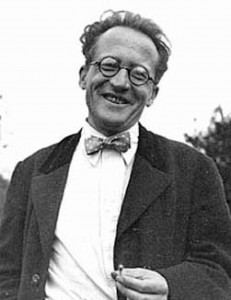 Erwin Schrödinger proposes a system that is formed by a closed and opaque box that contains a cat inside, a bottle of poisonous gas and a device, which contains a single radioactive particle with a 50% probability of disintegrating in a given time, so that if the particle disintegrates, the poison is released and the cat dies.
At the end of the set time, there is a 50% chance that the device has activated and the cat is dead, and an equal chance that the device has not activated and the cat is alive. According to the principles of quantum mechanics, the correct description of the system at that moment (its wave function) will be the result of the superposition of the "alive" and "dead" states (in turn described by its wave function). However, once the box is opened to check the cat's condition, it will be dead or alive.
It happens that there is a property that electrons have, of being able to be in two different places at the same time, being able to be detected by the two receptors and giving us the suspicion that the cat is alive and dead at the same time, which is called Superposition. But when we open the box and want to check if the cat is still alive or not, we will disturb this state and see if the cat is alive or dead.
Therein lies the paradox of The cat of Schrödinger. While in the classical description of the system the cat will be alive or dead before we open the box and check its state, in quantum mechanics the system is in a superposition of possible states until the observer intervenes, which cannot be possible by the simple use of logic. The transition from a superposition of states to a defined state occurs as a consequence of the measurement process, and the final state of the system cannot be predicted: only the probability of obtaining each result. The nature of the process remains unknown, which has given rise to different interpretations of a speculative nature.
We leave you an explanatory video where we can clearly see where the paradox established by the experiment lies. Schrödinger's cat.
How does Schrödinger's Cat theory affect time travel?
Well, a world of possibilities opens up, and never better said. The problem of The cat of Schrödinger call into question the existence of multiple possible realities, which for example could be created every time an election is presented. The existence of different timelines is known to true Time Travelers.
This theory has been taken as the main theme to the big screen on some occasions, a recent film that shocked me due to its low budget and impressive result is the psychological thriller of Coherence. Highly recommended.
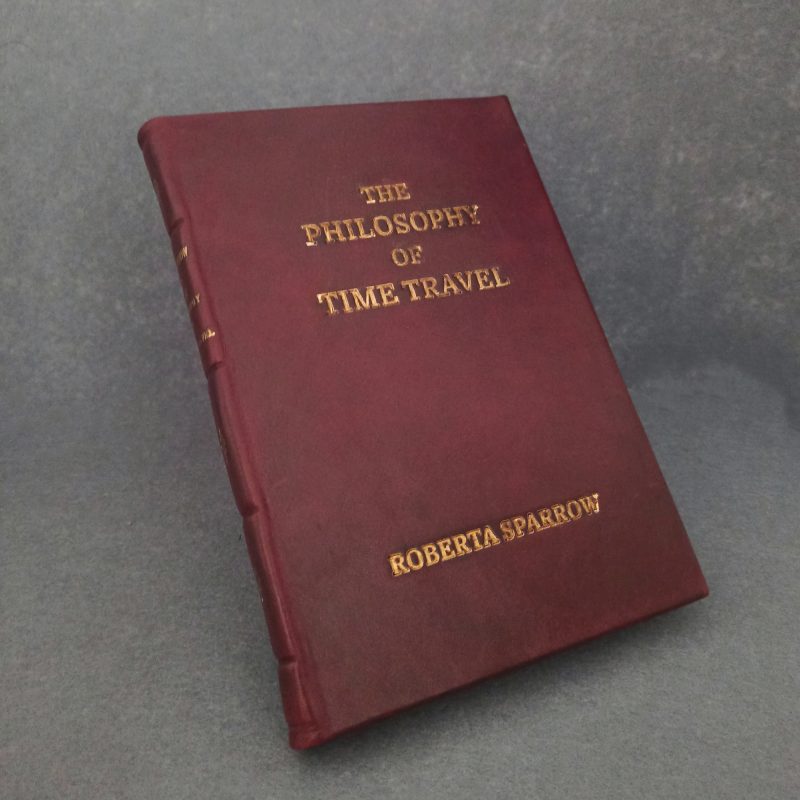
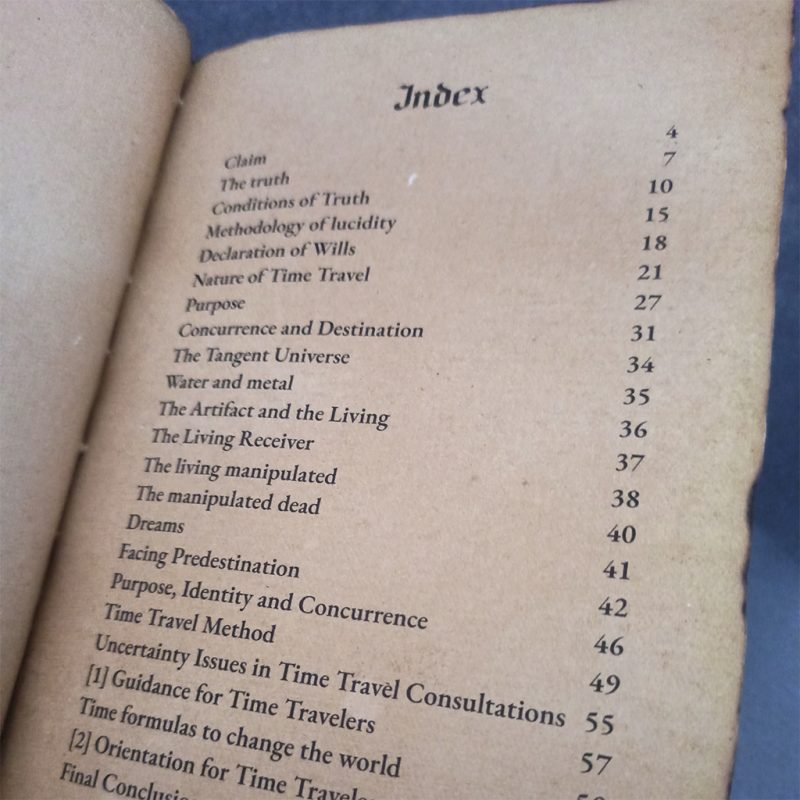
Reading for chrononauts · Limited edition
Philosophy can also cross time
A handmade work that explores the temporary traveler ethics, the concurrence of timelines, destiny and an introspective method to explore one's own history.
- Philosophy and moral standards for time travelers
- Tangent universes, causality, purpose and identity
- Illustrated and handcrafted A5 format
The file, availability and purchase are managed in Verbalus Mater.